
Set an objective before entering the shop
A useful retail visit has an objective that fits the outlet. One shop may need an availability check; another may need clarification of a previous delivery. Arriving with the same generic pitch every time wastes the buyer's attention and makes it harder to record what the visit achieved. Review the last action and relevant customer details before approaching the counter.
Keep the objective realistic for a busy trading environment. If a shop in a Kano market is serving a queue, ask for a suitable moment rather than beginning a long presentation. Confirm that you are speaking to someone authorised to discuss the order. A friendly conversation with a temporary assistant should not be recorded as a buyer's approval.
Check the outlet and capture the right context
Confirm the customer record before saving a visit. Similar shop names, nearby branches and shared phone numbers can lead to activity being attached to the wrong outlet. Where the location or contact details have changed, follow your team's correction process. Avoid creating a new customer just because the existing entry looks incomplete; a duplicate makes future coverage and follow-up harder.
If your process uses a site photo, explain its purpose and avoid capturing customers, paperwork or other personal details unnecessarily. A photo should help establish the visit context. It should not substitute for notes about the conversation. Record an access problem or a closed shop honestly, using the relevant visit outcome rather than inventing a completed sales discussion.
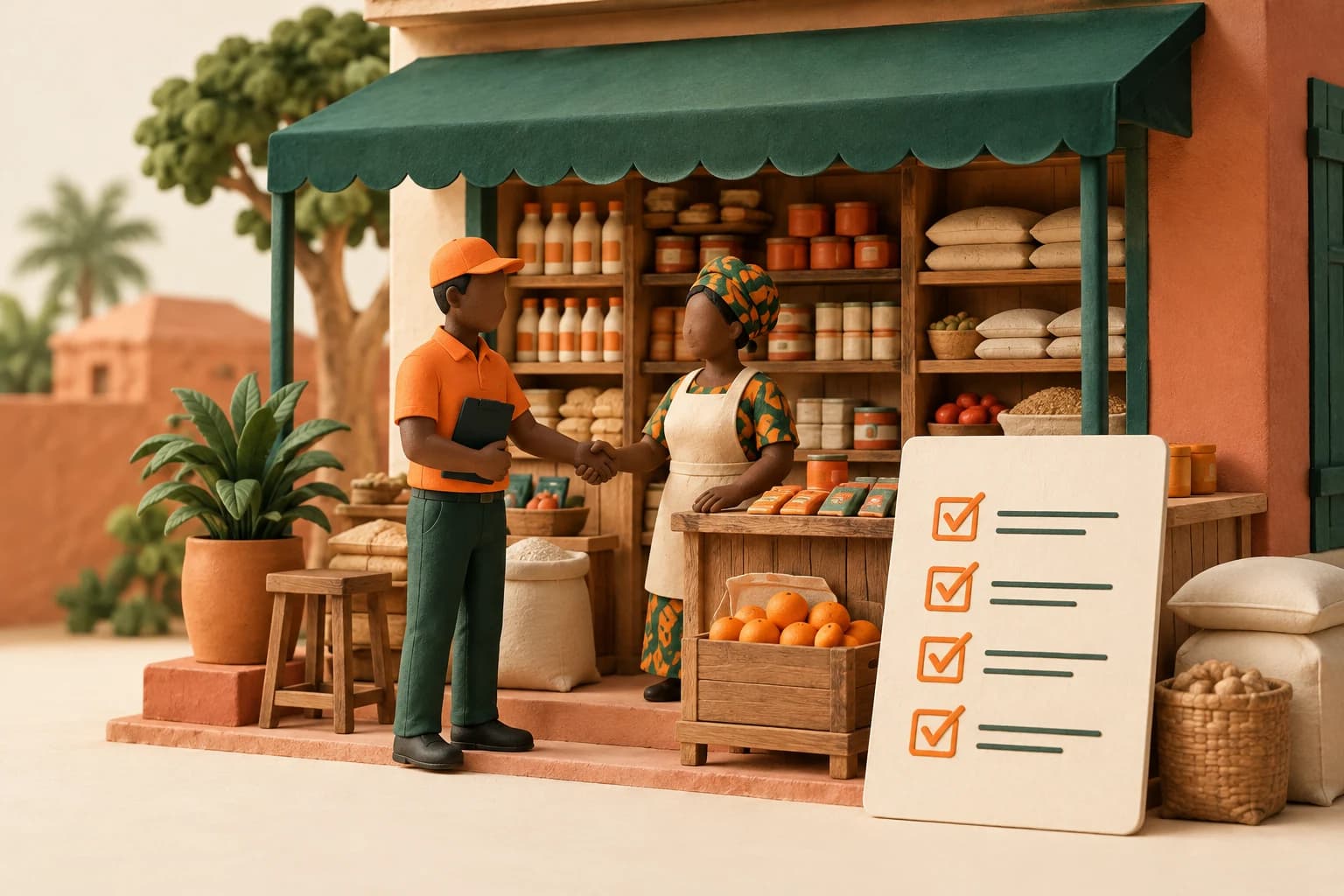
Use a simple in-store checklist
Agree which observations matter for the products your business supplies. An availability check should identify the specific product and pack size, not just say that stock is low. If a shelf is empty, ask whether stock is available elsewhere in the shop before concluding that the outlet has run out. Record only what you observed or the buyer confirmed.
- Confirm outlet identity, buyer availability and the purpose of the visit.
- Review relevant products, pack sizes and visible availability.
- Discuss outstanding delivery questions or previously agreed actions.
- Confirm requested quantities, units and any applicable price information.
- Repeat the agreed next step and record who will act by when.
Turn observations into an accurate order
The following example is illustrative. A buyer says, 'Send four of the small ones.' Before entering an order, the rep confirms whether that means four pieces, four packs or four cartons, and which product variant the buyer means. The recorded line should identify the product, its unit and the quantity. A familiar phrase is not a reliable product description when the warehouse must interpret it later.
Read the order back before leaving. Keep an interest in a product separate from a confirmed request, and keep both separate from a completed delivery. If the buyer asks for an unavailable item, record the request as a follow-up rather than presenting it as supplied stock. Those distinctions make the visit useful to sales, dispatch and customer service.
Record the outcome while it is fresh
Write a short note at the outlet or immediately after the conversation when it is appropriate to do so. Include the decision, the important exception and the next action. Avoid a long transcript or subjective descriptions of the buyer. 'Buyer asked for the delivery date before confirming quantity; dispatch to advise tomorrow' gives a colleague something concrete to work with.
When the phone has no connection, confirm that the entry is saved locally and review its sync status later. The office cannot act on a record it has not received. If an issue is urgent, use your agreed escalation method and reference the customer clearly. After connectivity returns, reconcile the formal entry so the same issue does not develop two competing histories.
Coach the process without turning it into a script
Use the checklist as a minimum standard, not a line-by-line speech. Experienced representatives should adapt their conversation to the customer's needs while preserving accurate records. During coaching, review whether notes explain the next action and whether order units are clear. The quality of one visit can teach more than a count of many entries with no useful context.
Trurep supports customer check-ins with location, a site photo and notes, alongside sales capture. Teams can use those records to support this routine after syncing. Your own outlet standards still determine what a good visit looks like. Review the checklist when product ranges or service responsibilities change, and remove questions that nobody uses to make a decision.